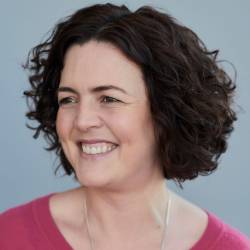

11 May 2026 - CISL Senior Associate and award-winning business leader Beth Knight reflects on how postgraduate study at the University of Cambridge Institute for Sustainability Leadership enabled her to shift from “doing good on the side” to placing sustainability and social impact at the heart of her career.
Programme: Postgraduate Certificate in Sustainable Business (2012) and MSt in Sustainability Leadership (2015)
Job title: Director | CISL Senior Associate
Why did you apply for postgraduate studies with CISL?
When I applied for postgraduate study with the University of Cambridge Institute for Sustainability Leadership (CISL), I was at an inflection point in my career, moving from “doing good on the side” to wanting sustainability and social impact to be the organising principle of my work.
I first applied to the Postgraduate Certificate in Sustainable Business (PCSB), which was the right step at that point in my career because it allowed me to test and apply new thinking without stepping away from a demanding full‑time role. I could see both the scale of the climate and inequality crises and the huge, untapped opportunity for business to be a genuine force for systems change, but I knew I needed a more rigorous toolkit to lead that change credibly in boardrooms and on the ground.
I chose CISL because it uniquely combines academic depth with a very practical, cross-sector lens, bringing together people from corporates, NGOs, startups and policy. I expected the programme to give me three things: a robust understanding of science‑based pathways and frameworks; tools for systems thinking and organisational change; and a diverse peer network to challenge my assumptions and support collaboration over the long term. That combination has underpinned almost every major career decision I’ve made since. Completing the PCSB made it clear that sustainability was no longer a side interest but the core of my professional identity, which is why I chose to continue into the MSt in Sustainability Leadership to deepen both the academic rigour and the scale of impact I could have.
Describe your experience of studying with CISL
Studying with CISL felt like having the world open up and narrow into focus at the same time: suddenly I had access to global perspectives and cutting‑edge research, while also gaining very concrete methods I could take back into my day job the next morning. On the PCSB, that meant using each assignment as a live laboratory for the sustainability projects I was leading in my organisation; on the MSt, it meant stepping back to work at a more strategic level, drawing on research, supervision and a multi‑year learning journey to influence whole‑organisation and system‑level change.
The programmes are demanding both intellectually and emotionally because they ask you not just to learn new concepts but to interrogate your own role in the systems you’re trying to change. What surprised me most was how personal the experience was. Despite being part of large international cohorts, I felt known and supported by supervisors who brought real‑world experience from boardrooms, communities and policy forums. The assignments were not abstract essays; they were live “test beds” for projects I was already leading or wanted to initiate, which meant the return on effort was immediate for my organisation and for me. When I describe CISL to others, I say it’s less like a traditional academic course and more like joining a global action‑learning community that stays with you long after graduation – I now work alongside fellow alumni, teach on programmes, and see CISL thinking turning up in strategies and partnerships all over the world.
How have you applied this learning within your organisation?
One example is my work leading social sustainability initiatives in major corporates and NGOs, where CISL’s systems thinking and stakeholder engagement frameworks have been invaluable.
During my time at Amazon, for instance, I drew directly on CISL tools to help design a multi-country humanitarian response to the war in Ukraine, working with NGOs to align donations, logistics, and technology around community-defined needs rather than corporate assumptions. The structured approach to impact measurement and theory of change that I first practised in CISL assignments helped my teams and me translate urgency into an integrated, scalable programme.
I’ve also applied CISL learning in my pro bono leadership roles. As Chair of Save the Children UK’s Corporate Advisory Board and as a mentor to climate-tech and social-impact start-ups, I routinely use the programme’s emphasis on long-term value, just transition, and inclusive governance to challenge short-term thinking and bring underrepresented voices into decision-making. These experiences, in turn, now inform how I supervise CISL postgraduate students and lead the Business Sustainability Management course, creating a virtuous circle in which practice and learning continually reinforce each other. In many ways, I see my current role as a CISL Senior Associate as an extension of my original PCSB and MSt journey: I’m now helping new cohorts use the same frameworks and peer learning that shifted my own career, whether they join through a short online course, a postgraduate certificate or a full Master’s.
How do you feel CISL postgraduate programmes can benefit others?
CISL’s postgraduate programmes are particularly powerful for people who feel a tension between the scale of the challenges we face and the constraints of their current role – they help you see where your unique leverage lies and how to use it responsibly. One of the strengths of CISL is that there are different entry points depending on where you are in your journey. For some, a postgraduate certificate or an online course is the right place to start: it gives you language, tools and confidence to integrate sustainability into your current role. For others, especially those looking to lead at board, C‑suite or system level, the depth and duration of the MSt creates space to re‑examine your purpose, build new forms of expertise and influence, and design bolder interventions.
I would recommend the programmes to professionals in business, finance, government, civil society and entrepreneurship who are ready to move beyond incremental “ESG as usual” and into deeper transformation of strategy, culture and business models. The benefit is twofold: you gain a rigorous, science aligned understanding of climate, nature and social justice, and you learn how to lead change in complex organisations and systems. Alumni leave with concrete tools and with a global network that makes it much easier to turn ideas into action. In my experience, that combination doesn’t just enhance individual careers; it helps organisations prepare for and accelerate the wider transition to a more sustainable and equitable economy.