

The Aviation Impact Accelerator is the global systems change organisation in aviation, based in the University of Cambridge. Combining data modelling and expertise across industry, governments and academia, we drive the transition to climate-neutral aviation.
Why the AIA exists
The aviation sector offers society significant value – facilitating the flow of goods and services and allowing ideas and people to connect. However, the sector also makes a significant and growing contribution to climate change. Thus far, it has not responded substantively to the global shift towards a net zero future.
To achieve that shift will require joined-up thinking by decision makers, making the right policy and investment decisions. The scale and urgency of change required to meet the sector’s 2050 net zero goal demands transformative change that requires simultaneously understanding multiple factors. These include aircraft design and operation; energy production; fuel production and supply chains; land use; airport infrastructure; and the non-CO2 impacts of aviation. All of these factors need to be considered alongside the economics and safety constraints involved.
The project was born out of a series of discussions hosted by His Majesty The King (then The Prince of Wales) in early 2020. These included roundtables at Clarence House and the Whittle Laboratory in Cambridge, convened by CISL and the Sustainable Markets Initiative. These initial meetings were attended by high-level aviation business leaders, academics and policy makers.
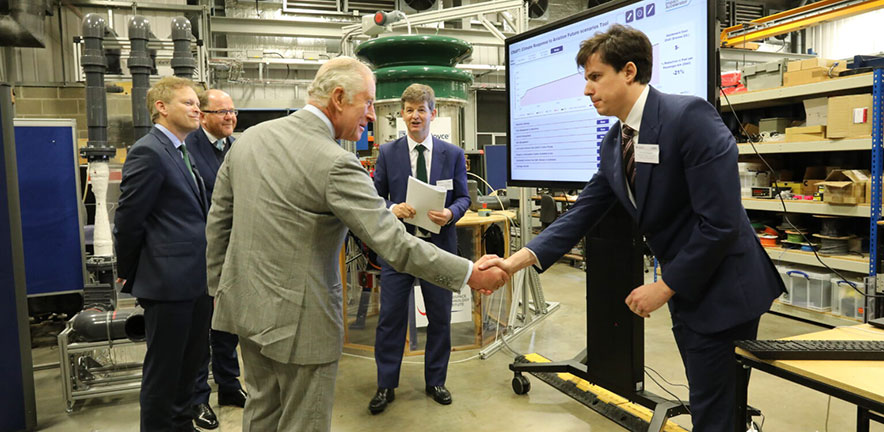
His Majesty The King breaking ground on the New Whittle Laboratory alongside government ministers and members of the AIA team.
About the Aviation Impact Accelerator
The AIA is an international group of practitioners and academics convened by the University of Cambridge. Benefitting from its ability to draw from multi-disciplinary and multi-sectoral expertise, it develops interactive, evidence-based models, simulations, and visualisations. These tools assist decision-makers and the wider public to understand the pathways to net zero flight and the challenges and trade-offs different stakeholders are facing. The project provides an authoritative evaluation of possible future technology choices, emphasising the impact, opportunities and risks for aviation industry stakeholders and senior decision-makers.
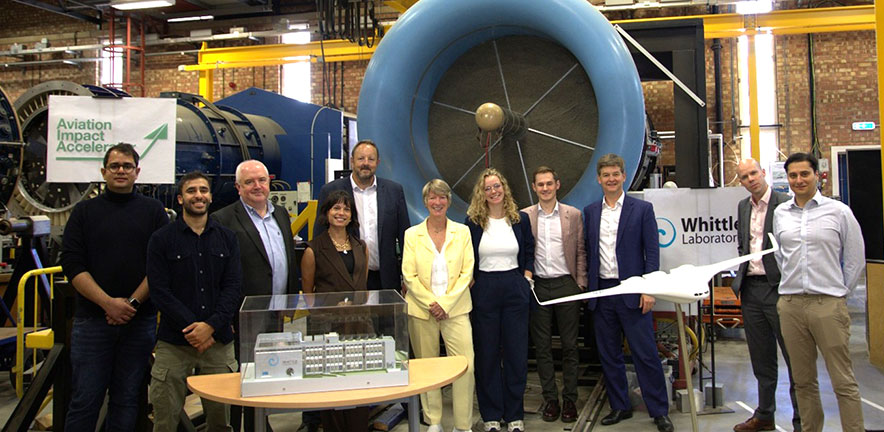
Members of the AIA team and the House of Commons Environmental Audit Committee on a visit to the Whittle Lab, September 2025
The AIA’s core team of around 15 analysts, engineers and policy experts draws on a wider network of academic and industry practitioners and has worked with over 80 different companies in the aviation sector. The project team is composed of small, cross-disciplinary sub-teams looking at multiple aspects of the aviation system including aircraft and propulsion technology; fuels; airports; network modelling; non-CO2 emissions; model design and the broader economic and policy context. Key achievements of the AIA to date include:
- The AIA’s modelling work has been showcased at policy moments like the climate COPs, major industry events including Farnborough Airshow, and on Sky and BBC News.
- An extensive network of industry partners has been developed including Rolls Royce, IATA, Emirates and the Royal Air Force among others.
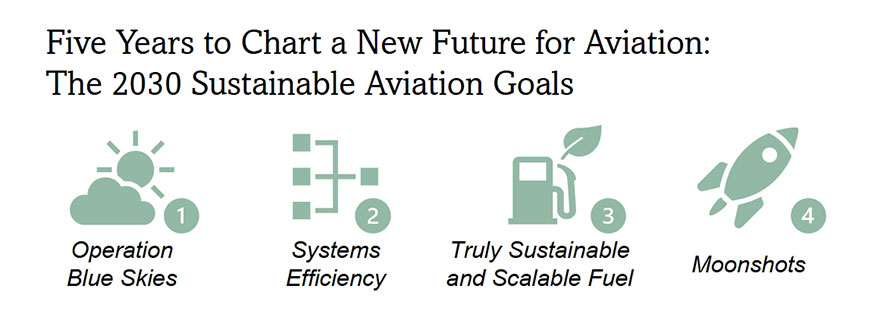
- Launch of the 2030 Sustainable Aviation Goals report setting out the actions required in the short term to enable achieve Net Zero by 2050.
- Continued to work with policymakers, including hosting MPs from the Environmental Audit Committee in Cambridge, holding an event in the Houses of Parliament and conducting targeted sprints with the Department for Transport.
- Built collaborations with leaders in academia and civil society, including convening the Transatlantic Strategic Aviation Partnership with MIT and working with the World Economic Forum to deliver the Target True Zero report exploring the impact of alternative propulsion technologies in aviation.
Who’s involved?
The AIA is led by the University of Cambridge’s Whittle Laboratory and Cambridge Institute for Sustainability Leadership (CISL). The Whittle Lab leads research on the project, leveraging its expertise to explore future technologies and their environmental impact to advance sustainable aviation. CISL coordinates stakeholder engagement, drawing on its vast network and decades of experience in sustainability and policy to drive impactful action toward a sustainable economy. Alongside this, team members lead on communications and media opportunities as well as policy and business research.
CISL also hosts The King’s Global Sustainability Fellow in Climate Risk in Aviation. The current Fellow, Dr Qi Song, is working to identify and prioritise key actionable policy levers that can accelerate progress in sustainable aviation transitions by 2030, and to feed these insights into ongoing policy debates.
Collaboration with academic and industry partners is key to the initiative, enabling access to latest cutting-edge aviation research and multidisciplinary expertise to shape a greener future for aviation. AIA’s industry partners include Rolls-Royce, Boeing, Emirates, 4AIR, Flexjet, Heathrow Airport, Royal Air Force and Stratos. The AIA also collaborates with the Sustainable Markets Initiative, World Economic Forum, Breakthrough Energy and academic institutions like MIT’s laboratory for Aviation and Environment, Judge Business School, Air Transportation Systems Lab at University College London, and the Melbourne Energy Institute at the University of Melbourne.
The AIA is independent from the organisations that fund and engage with the project, ensuring that the project outcomes remain unbiased.
“Aviation remains one of the most challenging sectors to decarbonise, and CISL is proud to be playing a central role in delivering the AIA’s mission of truly sustainable future flight. We need the disruptive innovators, policymakers, engineers and industry leaders to come together now – within the short window of time remaining – to deliver on the 2030 Sustainable Aviation Goals and keep the promise of low-carbon flight alive. Along with our partners in business, in government and in industry there is a path ahead – but we must take decisive steps now if we are to successfully navigate it; steering the way is the AIA, and I have great confidence that the initiative will continue to deliver.”
Eliot Whittington (Chief Systems Change Officer, CISL)
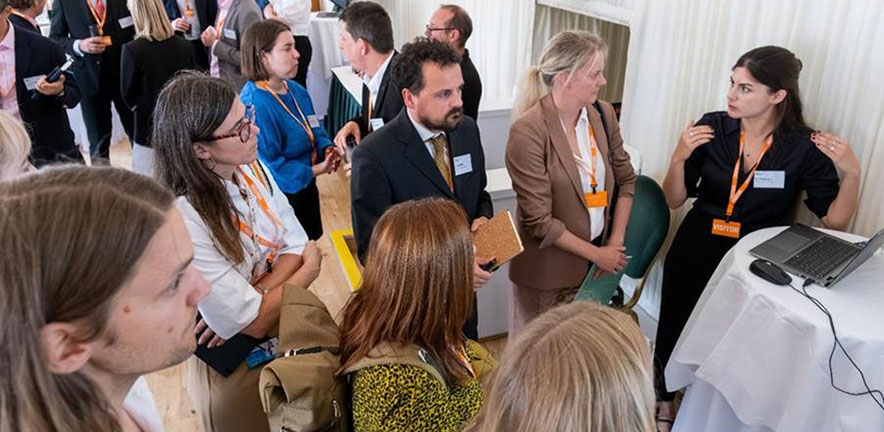
AIA analyst Ana S. demonstrating the ‘Chart your own Future’ tool to attendees at the AIA’s Parliamentary event in the House of Commons, part of our ongoing work to engage policymakers.
For more information on the project please visit the AIA’s website.
Follow the AIA on LinkedIn
The AIA benefits from a range of academic, business and policy stakeholders contributing their time, expertise, and networks. The initiative is seeking to include a wider range of supporters.
If you would like to hear more about the opportunity to engage and support the Aviation Impact Accelerator, please get in touch at info@aiazero.org.