
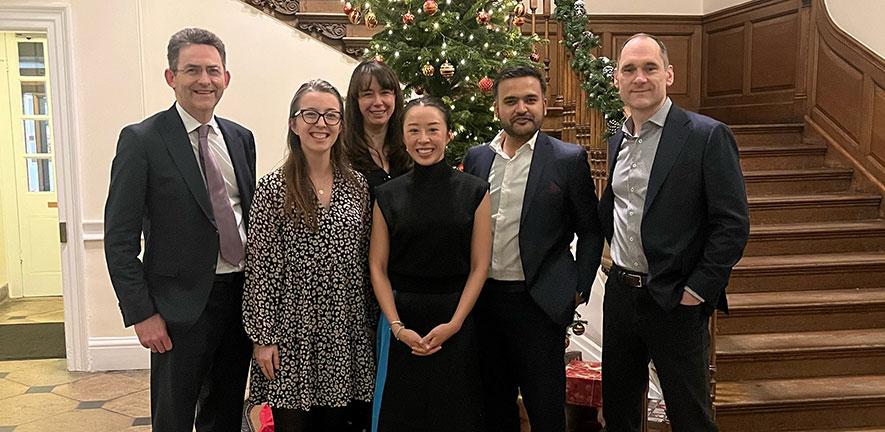
27 January 2026 - Serene Law, CSR Manager at Louis Vuitton and a student on the Postgraduate Certificate in Sustainable Business (PCSB). Serene shares how immersive learning and rich peer collaboration at Madingley Hall leave her inspired and motivated to drive sustainable change.
My day begins with…
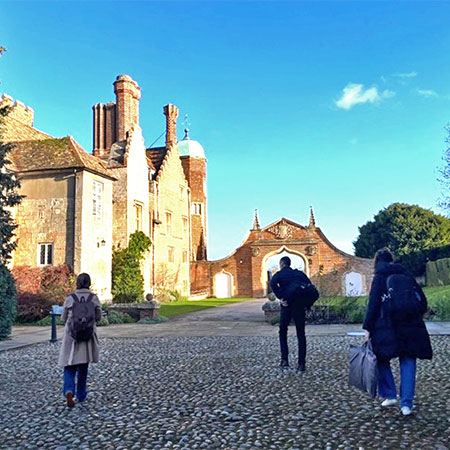
My day begins with a stroll around the Downton Abbey–esque Madingley Hall, located just a few miles from Cambridge city center. Surrounded by neatly trimmed topiary gardens and grazing sheep, the hall provides a distinctly calm environment where students can focus, reflect, and collaborate on sustainability challenges and solutions. The change of scene, combined with the academic atmosphere, makes it easier to contribute openly and experiment with new ways of thinking.
The workshops offer plenty of opportunities to connect with peers, starting with breakfast. Each day unfolds around shared mealtimes that bring together students from both program streams to exchange insights and reflect on different lectures. Over coffee and pastries, conversations quickly move beyond small talk to sharing professional experiences, testing ideas, and exploring how sustainability challenges manifest in diverse contexts.
The workshop starts with…
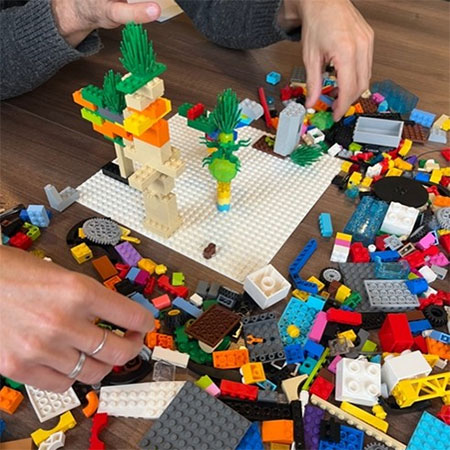
A 9am session, typically opened by our Course Director, who frames the day's focus or clarifies an upcoming assignment. The morning then unfolds with sessions led by industry professionals and academics, covering themes from sustainable operations and circular economy models to stakeholder engagement strategies. On occasion, we are even tasked with a hands-on exercise like building a LEGO forest.
Each session is rich with group discussions, providing a space to explore how to apply our learning to our specific professional contexts. We are often prompted to challenge one another through tough questions or repeated "why" drills, uncovering barriers and reimagining our roles in organizations. This interactive approach fosters critical thinking and practical application.
Between sessions we…
We spill into the Gallery for refreshment breaks. These are moments we seize to stretch our legs, recharge cognitively, and maximize our limited time together as a cohort. Here, the group's rich diversity in geography, industry, and professional roles becomes very apparent.
These interludes also serve as windows for us to reflect on prior sessions, either alone or in conversation. I find discussing materials with peers especially stimulating, as sustainability relies heavily on creative thinking and practical application. An idea unworkable in one context can evolve into a viable solution through a brief brainstorming exercise.
After lunch we…
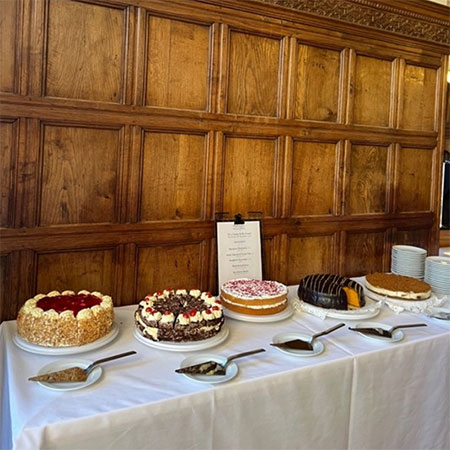
We fight off the post‑lunch slump with hands-on, problem-solving work, especially our group project discussions. These in-person sessions are some of the most valuable moments of the workshop for our research group, as they are our only opportunity to work together face to face. They help us understand each other’s working styles, build effective ways of collaborating, and harness the energy of being in the same room to synthesize our research more effectively. During these group project sessions, our supervisor pushes us to sharpen our research question, challenge our assumptions, and leave with a concrete plan for the next phase of our research. By the end, any guilt about indulging in the irresistible cake selection at lunch has usually evaporated.
This applied approach extends to article-based supervisions, where a supervisor leads focused discussions of key papers to build our confidence in reading and critiquing research. Through these sessions, we sharpen our literature review skills – a research method often new to those of us from business backgrounds.
After sessions finish, I have the opportunity to...
Evenings provide an opportunity to relax with peers and experience Cambridge beyond the classroom. A highlight is the Gala Dinner, which invites us to take part in the classic Cambridge tradition of formal communal dining. This celebratory event offers the perfect setting to connect with faculty and fellow students we may not have interacted with during sessions. It also provides a chance to learn more about the rich history of the University of Cambridge and the specific college where we are staying.
The cohort usually enjoys an evening trip into the city on the last day, where we explore other colleges and wander around for a taste of Cambridge's pubs and restaurants. These outings are a refreshing way to connect with our peers not just as sustainability professionals, but as individuals. By sharing these new experiences together, we strengthen the bonds that make our collaboration even more rewarding.
After a day of learning, I feel…
After a full day of learning, I often feel a mix of excitement and exhaustion. It’s no exaggeration to say that these workshops are both immersive and intense. The depth of engagement leaves little room for immediate reflection, yet they remain the most rewarding part of the program. Fueled by meaningful conversations, shared insights, and a strong sense of camaraderie, we leave each session not only with a clearer understanding of the tasks and challenges ahead but also with a renewed sense of optimism. We carry with us the confidence that, individually and collectively, we can use our spheres of influence to help our organizations – and perhaps even society at large – move toward a greener future.
I am excited by…
The workshop has shown me that addressing sustainability effectively requires a wide range of perspectives – from communication strategies and shifting stakeholder priorities to financial and operational considerations. Framing it solely as “the right thing to do” is often insufficient and risks oversimplifying the issue. The world is inherently complex, and so are the business systems within it. This means sustainability challenges must be examined from multiple angles and addressed on several fronts simultaneously. A narrative grounded purely in moral arguments rarely captures this complexity for stakeholders and can even obscure the urgency and strategic importance of the agenda.
One of my most valuable takeaways has been the opportunity to engage with diverse thinkers on how best to approach these interconnected problems. When deeply immersed in a specific context, it’s easy to lose perspective and overlook the broader vision or long-term goals. The sustainability challenge is far too vast for any one person to tackle alone, yet the workshop has connected me with a cohort of motivated, capable leaders ready to share the responsibility – and move forward together.