
23 October 2025 - Discover five powerful insights from the Sustainable Marketing course at CISL that reshaped how I view marketing’s role in driving systemic change. From purpose-led strategy to citizen-centric storytelling, this journey revealed how marketing can inspire wellbeing for people, business, and planet.
When I joined the Sustainable Marketing, Communications and Brand Management 8-week online course at the Cambridge Institute for Sustainability Leadership (CISL), I wanted to broaden my skills and deepen my understanding of the forces shaping marketing today. Coming from a background in marketing, I was curious about the strategies and psychology guiding the evolving marketing landscape. What I hadn’t expected was how powerfully marketing could serve as a driving force for sustainability and systemic change.
Over eight weeks, the course opened my eyes to marketing’s potential not just to influence consumption, but to inspire wellbeing for people, businesses, and planet. The course combined academic rigour with real-world application, showing that meaningful change requires both individual commitment and collective collaboration.
Here are the five biggest lessons that reshaped how I think about marketing’s role in building a sustainable future.
1. Understanding the urgency
Our modern economy has delivered extraordinary growth, fuelled by innovation, trade, and technology. Yet, this growth has also brought us to the edge of environmental and social crises that threaten the long-term wellbeing of people, nature, and climate. The interconnectedness of these challenges means we cannot address them in isolation.
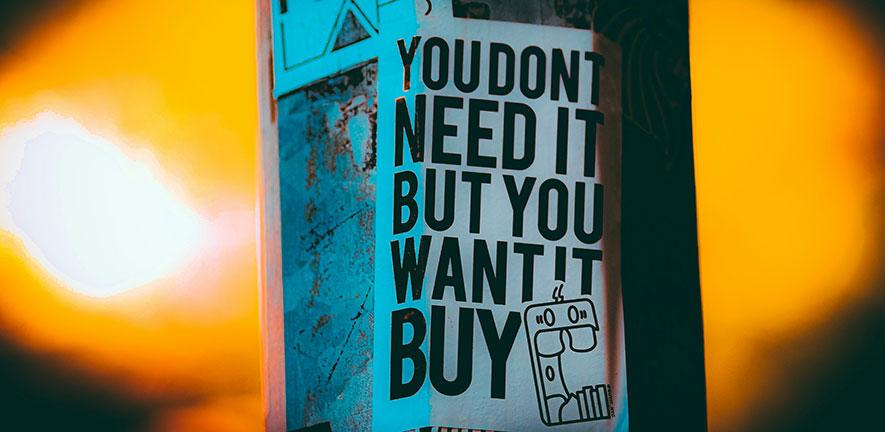
The course shone a light on how marketing, often seen as a driver of revenue generation and consumerism, can instead become a catalyst for systemic transformation. By shifting to a citizen-centric approach (seeing people as active participants in society rather than passive consumers) we can use marketing to inspire conscious choices, shared responsibility, and innovation that serves collective wellbeing.
2. The marketing we need
If we are to move from an extractive to a wellbeing economy, marketing must be redefined as a change-enabling discipline. This means reorienting marketing’s power from persuading people to buy more, to connecting them with ideas and solutions that promote long-term sustainability and purpose.
We explored how marketing can:
- Inform and connect people to new opportunities for wellbeing.
- Inspire innovation that prioritises social and environmental benefit
- Practise demarketing - encouraging people to consume less, and more mindfully.
- Promote values and norms that reconnect people to each other and to the planet.
Marketing, in this sense, is not just about communication: it is about shaping culture. It is about telling the story of what a better world looks like and helping people believe that such a future is desirable and achievable.
3. Purpose as a call to action
One of the most thought-provoking ideas we explored was redefining purpose. The course emphasised that true purpose is not a slogan, mission statement, or marketing angle. It is an organisational commitment to long-term wellbeing for all stakeholders.
Becoming a purpose-driven organisation means asking difficult questions: what should we stop doing? What should we start doing? What must we continue doing to align our impact with a sustainable future? Purpose must shape not only how brands present themselves, but how they operate every day. It is an ongoing process of reflection, action, and accountability.
4. Rethinking the 4Ps
As marketers, we are familiar with the classic 4Ps (Product, Price, Place, and Promotion). The course challenged us to see these through the lens of brainprint, the psychological and cultural influence our work has on beliefs, lifestyles, and values across society.
Marketing doesn’t just respond to culture; it shapes it. The choices we make, including what we promote, how we price, and which narratives we elevate, help define what is “normal” and “desirable.” By rethinking each P, we can weave sustainability into the very fabric of how business operates. Creativity, in all its forms, becomes a tool for transformation: art, design, and storytelling can all make sustainability tangible, relatable, and inspiring.
5. Leadership for a sustainable future
If systemic change is the destination, leadership is the engine that gets us there. The course invited us to think about leadership across three dimensions: thinking, values, and practice.
- Thinking is about developing the mindset to navigate complexity and innovate under uncertainty.
- Values reflect how our personal purpose and ethics influence business decisions.
- Practice involves cultivating the skills, like empathy, authenticity, and collaboration, that enable sustainable transformation.
True leadership in sustainability is not about having all the answers. It’s about co-creating them with others, empowering diverse voices, and building cultures that enable reflection, experimentation, and courage.
A call to action
The most important takeaway for me? Change begins with ourselves. As marketers, communicators, and creatives, we hold the power to influence behaviours, shape narratives, and rewrite norms. That power comes with responsibility. To drive systemic change, we must start by aligning our own values, actions, and habits with the world we want to create and reflecting these values in our every day practice of marketing.
The Sustainable Marketing, Communications and Brand Management course taught me not just what needs to change, but how we can lead that change, together. It reaffirmed that marketing, when guided by purpose and vision, can help build a future where both business and society thrive.
If you’re ready to explore how marketing can become a force for positive transformation, the Sustainable Marketing, Communications and Brand Management 8-week online course is an excellent place to start.